That Grinding Noise: Why Your Sliding Door Sounds Like a Train Wreck
Quick Answer: If your sliding door is making a grinding noise, it usually means the rollers have failed and the metal door frame is dragging directly on the metal track. This metal-on-metal contact causes rapid wear and can permanently damage the track. The real fix is replacing the rollers and, in some cases, installing a stainless steel track cap to restore smooth operation.
Let’s be honest — when your sliding door starts sounding like a freight train pulling into your living room, it’s not just annoying… it’s a warning sign.
We hear “sliding door making grinding noise” and “noisy sliding door repair” questions all the time. Most homeowners assume it’s dirt or just “an old door being old.” But grinding noises don’t happen by accident. They happen because something important has already failed.
Here’s what that sound actually means, what damage it’s causing behind the scenes, and what you should do about it before the repair bill gets bigger.
What That Grinding Sound Really Is
When a sliding door is working correctly, the door weight is supported by rollers — small wheels that glide smoothly along the track.
When you hear grinding, it almost always means:
The rollers are no longer doing their job.
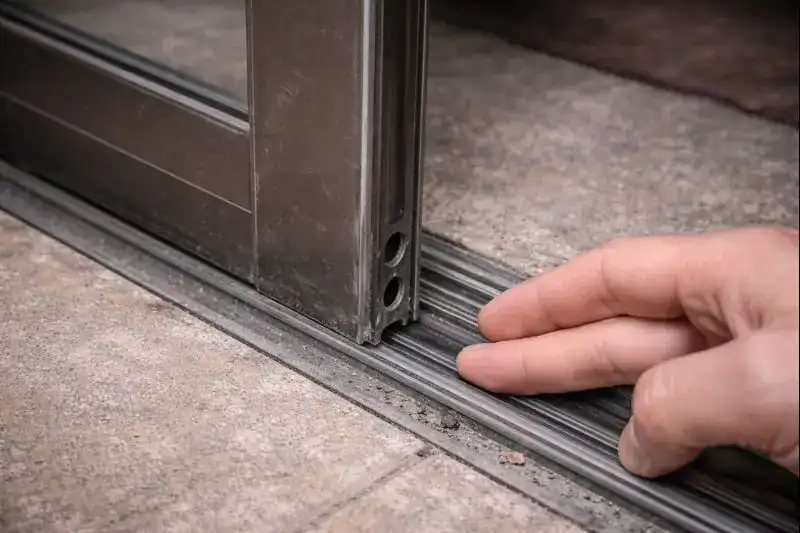
Instead of rolling, the bottom frame of the door is scraping directly across the metal track.
Metal-on-Metal Contact (The Real Culprit)
Once rollers crack, flatten, seize up, or completely disintegrate, the door drops slightly. That shift forces the aluminum or steel door frame to drag on the track.
That’s where the awful noise comes from:
- Metal scraping on metal
- High friction under heavy weight
- Vibration echoing through the frame
This is not normal wear. It’s mechanical failure.
According to the National Association of Home Builders (NAHB), sliding door hardware is designed to distribute load through rolling mechanisms — once that system fails, structural wear accelerates rapidly.
Why Ignoring the Noise Is a Bad Idea
A noisy sliding door doesn’t just “stay noisy.” It gets worse. And more expensive.
Permanent Track Damage
Tracks are made of aluminum — which is softer than steel rollers and heavy door frames. When the frame drags directly on the track, it starts carving grooves into the metal.
Over time, this leads to:
- Deep pitting and uneven surfaces
- Warped track edges
- Loss of proper door alignment
Once track damage reaches a certain point, simply replacing rollers won’t be enough.
More Strain on the Door System
The grinding sound also means:
- Extra stress on the frame
- Higher risk of glass misalignment
- Increased chance of the door jumping the track
According to Energy.gov, damaged doors and misaligned frames can also affect air sealing and insulation performance — meaning your noisy door may also be leaking conditioned air.
Common Grinding Noise Causes
| Cause | What It Sounds Like | Damage Risk |
|---|---|---|
| Worn Rollers | Scraping, rough rumble | High |
| Seized Bearings | Squealing + grinding | High |
| Flat-Spotted Wheels | Thumping + grinding | Moderate |
| Debris in Track | Crunching sound | Low (if cleaned early) |
Why Lubrication Doesn’t Solve Grinding
One of the most common mistakes homeowners make is spraying lubricant on a grinding sliding door.
Here’s the reality:
- Lubricant cannot rebuild broken rollers
- It doesn’t stop metal-on-metal contact
- It attracts dust and grit over time
At best, lubrication masks the noise temporarily. At worst, it creates sticky buildup that accelerates wear.
The CDC even recommends avoiding unnecessary chemical sprays indoors when mechanical repair is the real solution — especially in enclosed living spaces.
The Real Fix: What Actually Works
Roller Replacement
This is the primary solution in most grinding door cases.
Professional roller replacement:
- Restores proper door height
- Eliminates frame dragging
- Returns smooth gliding motion
Modern stainless steel rollers are far more durable than older plastic designs and perform much better in hot climates like Phoenix.
Track Capping (If Damage Already Exists)
If grinding has been happening for a while, the track may already be damaged.
In that case, a stainless steel track cap can:
- Cover worn aluminum surfaces
- Create a smooth rolling path
- Prevent full sliding door track replacement
This solution is significantly more affordable than replacing the entire door frame.
How to Know When It’s Urgent
You should treat grinding noises as urgent if:
- The door feels heavier every week
- The noise is getting louder
- The door vibrates when sliding
- You see metal shavings in the track
At this stage, continuing to use the door can multiply repair costs.
FAQs: Sliding Door Making Grinding Noise
Is a grinding sliding door dangerous?
It can be. Heavy doors under strain can jump tracks, shatter glass if misaligned, or pinch fingers when resistance suddenly releases.
Can I keep using my door if it’s grinding?
You can — but you shouldn’t. Each use increases track damage and repair costs.
How long do sliding door rollers last?
Plastic rollers often fail in 5–10 years. Stainless steel rollers can last significantly longer with proper sliding door roller installation.
Will replacing rollers make the noise disappear?
Yes — if track damage hasn’t progressed too far. If the track is already worn, track capping may also be required.
Does grinding mean I need a whole new door?
Rarely. Most noisy repairs can be handled with hardware upgrades rather than full slding door replacement.
Final Thoughts
A grinding sliding door isn’t just “old house noise.” It’s a mechanical failure warning you that your rollers are gone and your door is eating away at its own track.
The sooner you address it, the simpler and cheaper the repair will be. Ignore it long enough, and what could have been a basic roller replacement turns into a full track restoration job.
If your sliding door sounds like a train wreck, it’s time to fix it — before the damage becomes permanent.